

You might have been intrigued by the title above. Maybe your curiosity got the best of you or maybe you have reached the point in sales where you might be willing to try anything.
How far will you go to make the sale?
Maybe you can relate… many salespeople struggle with how to close sales. A prospect shows interest, asks questions, then delays the decision, walks away, or ghosts you altogether.
We’ve all been there.
I once owned a chain of hot tub stores. At the end of a busy Saturday, I stopped by to close one of my stores. When I locked the door I heard some screams coming from the parking lot.
I turned to see a car parked in front of mine at the back of the lot. They were the only two cars still there. As I quickly made my way toward the car I heard a woman shouting, “F*ck! F*ck! F*ck!”
I tapped on her driver glass and as the window came down I heard, “What do you want?!”
“It’s me… are you alright?”
“Oh… I’m sorry,” she responded. “Can I talk to you?”
I recognized then she was one of my newer salespeople, Trina.
“I am so sorry. You must think I’m crazy.”
“Are you?” I asked jokingly.

“It’s just that I met 7 prospects today all interested in a hot tub and I did not make one sale. I wasted 8 hours of my time and made nothing. I just don’t know how to close sales,” Trina vented.
I understood her aggravation. I paid generous commissions and those 7 possible sales could have netted Trina as much as $14,000. I shared with her how salespeople commonly become frustrated when their hard sales efforts and persuasion skills fail to produce signed agreements, payments, or deposits. And the salespeople miss out on commissions and / or raises.
“I feel like potential customers are now my enemy, that I somehow have to defeat them in order to win,” Trina said resignedly.
Out of frustration I have heard everything from salespeople:
“Buyers are liars.”
“You have to sell them before they sell you.”
“Sell or be sold.”
“Always be closing.”
“Everybody lies about budget.”
“Prospects only care about price.”
“People buy emotionally and justify logically.”
“Never take NO for an answer.”
“If they are talking, they are buying.”
“The prospect does not know what they really need.”
“Control the conversation or lose the sale.”
“Close before they close the door.”
“Wear them down.”
“Objections mean interest.”
“If they object, push harder.”
“Never take the first NO seriously.”
“Everybody can buy. Some people just need a push.”
“People do not know what they want.”
“Prospects need persuasion because they cannot decide alone.”
“Fear closes faster than benefits.”
“If you are not pushing, you are not selling.”
“Decision-makers only respect aggressive salespeople.”
“Get commitment before they think too much.”
“The customer is not your friend.”
“Winning the deal matters more than being liked.”
“Sales suck”
I related to Trina how salespeople in this frustrated state do one of two things.
“After some alone time screaming in their cars,” I smiled, they either:
One: Eventually get out of sales.
or
Two: Search out training, books, courses, videos, blogs, and everything they can get their hands on about how to close sales.”
“I don’t want to give up on sales, but I tried every persuasion tactic I have read about so far. Nothing worked,” Trina stated.
“Trina, I know you are new to our sales training. But I want you to know we do not teach persuasion tactics,” I informed her.
“Then how do you sell anything at all?” she puzzled.
“The fact is that closing sales rarely depends on persuasion. Let’s meet at the store Monday afternoon. I will walk you through this.

On Monday, I met with Trina to help her learn to how to close sales.
“First we earn the right to close as in my 8 to Close Sales System that you have already learned last week,” I started.
“Yes. But I get objections after I present the ‘offer opportunity’ as you call it, or the close,” Trina stated.
“So what do you do then?” I asked.
“Well I started using some of the persuasion tactics I learned from sales books I bought online,” she confessed.
“When prospects state objections is when salespeople attempt persuasion tactics the most. As you learn to master the ‘8 to Close Sales System’ you will eventually hear few objections. Let’s address the persuasion tactics. Years ago, I replaced ‘persuasion’ with ‘encouragement.’ Do you know the difference?”
“Not really” she responded.
I explained the definitions and differences to Trina.
Encouragement: To mentally and emotionally support; to motivate, give courage, hope or spirit. To spur on, strongly recommend, to foster, give help or patronage; To foster, give help or patronage.
Persuasion: The act of persuading, or trying to do so; the addressing of arguments to someone with the intention of changing their mind or convincing them of a certain point of view, course of action etc. An argument or other statement intended to influence one’s opinions or beliefs; a way of persuading someone.
“I see when you read the definitions, there is quite a difference. Persuasion seems more like creating conflict,” Trina concluded.
“You are exactly right,” I told her.
“How do I encourage prospects instead of persuading them?’ Trina asked me sincerely.
After telling me about some of the persuasion tactics Trina had learned I started with a list of some of the most offensive persuasion tactics and how to replace them with encouragement.
Manipulative Persuasion Example Statement:
“Successful people usually do not struggle this long to make obvious decisions.”
Underlying Tactic:
Attacks identity and competence to create emotional discomfort and force compliance to regain status.
How to Close Sales with an Encouragement Alternative:
“Regardless of what you decide, what is holding you back right now?”
Manipulative Persuasion Example Statement:
“This deal is a onetime offer and is gone forever if you miss out now.”
Underlying Tactic:
Creates urgency whether real or not to bypass careful reasoning.
How to Close Sales with an Encouragement Alternative:
“I am confident in our product, the service and support, and the wonderful experience you will have.” What would you like more confidence in?”
Manipulative Persuasion Example Statement:
“If you keep delaying, your competitors will dominate your market.”
Underlying Tactic:
Magnifies fear and worst-case outcomes to increase emotional pressure.
How to Close Sales with an Encouragement Alternative:
“From everything you have shared with me, you have a well thought out strategic plan, you and your team are capable of this project, the timing is right, you have the time, and you have full funding. Is there anything I am missing that would cause you to delay taking full advantage of this rare opportunity?”
Manipulative Persuasion Example Statement:
“Most serious business owners already understand why this solution matters.”
Underlying Tactic:
Creates fear of exclusion, inferiority, or being left behind socially.
Encouragement Alternative:
“Every business owner calculates growth decisions differently.”
Manipulative Persuasion Example Statement:
“You seem smarter than the average person I speak with, so you see the value here.”
Underlying Tactic:
Uses false flattery to reduce skepticism and encourage agreement.
Encouragement Alternative:
“Your questions show thoughtful evaluation and attention to detail, so I trust your reasoning.”
Manipulative Persuasion Example Statement:
“My team spent hours building this proposal specifically for your company.”
Underlying Tactic:
Creates emotional obligation and guilt pressure.
How to Close Sales with an Encouragement Alternative:
“I know you will come to the right decision with your careful consideration. That’s why I prepared this specific comprehensive plan for you.”
Manipulative Persuasion Example Statement: “You can either solve this problem now or continue losing money every month.”
Underlying Tactic:
Removes alternative solutions and oversimplifies complex decisions.
How to Close Sales Encouragement Alternative:
“I agree with you that this solution is a good fit and will begin saving you money the day this is implemented. I am ready when you are.”
Manipulative Persuasion Example Statement:
“Every major expert in this field agrees with this approach.”
Underlying Tactic:
Suppresses independent thinking through exaggerated authority claims.
How to Close Sales Encouragement Alternative:
“You are arriving at the same conclusions as the experts have.”
Manipulative Persuasion Example Statement:
“You are not going to do any better than this. Let’s go over all the features and benefits again so you understand how good this is…”
Underlying Tactic:
Attempts to wear down resistance and create decision fatigue.
How to Close Sales Encouragement Alternative:
“I believe in you. You have asked all the right questions and arrived at the conclusion that this is right for you now. I am here to support you and your decision.”
Manipulative Persuasion Example Statement:
“You are going to regret walking away from this opportunity.”
Underlying Tactic:
Projects future emotional pain to force immediate action.
How to Close Sales Encouragement Alternative:
“Your careful evaluation now can help you feel comfortable with your final decision.”
Manipulative Persuasion Example Statement:
“People with strong leadership instincts usually move quickly once they see an opportunity.”
Underlying Tactic:
Ties agreement to identity, leadership, intelligence, or success.
How to Close Sales Encouragement Alternative:
“Strong leaders like you balance thoughtful analysis with decisive action. How can I help?”
Manipulative Persuasion Example Statement:
“You really need guidance here because most owners make costly mistakes alone.”
Underlying Tactic:
Creates insecurity and dependence on the persuader.
How to Close Sales Encouragement Alternative:
“Outside perspective can sometimes help simplify difficult decisions.”
Manipulative Persuasion Example Statement:
“Everybody else approves this solution once they fully understand the process.”
Underlying Tactic:
Uses exaggerated consensus to discourage disagreement.
How to Close Sales Encouragement Alternative:
“Different organizations respond differently depending on goals and priorities.”
Manipulative Persuasion Example Statement:
“I need your answer before the day ends.”
Underlying Tactic:
Compresses decision-making time to weaken rational evaluation.
How to Close Sales Encouragement Alternative:
“We have plenty of decision breathing room here.”
Manipulative Persuasion Example Statement:
“This solution could finally remove the stress and frustration ruining your business life.”
Underlying Tactic:
Links emotional relief and personal salvation to the purchase.
How to Close Sales Encouragement Alternative:
“How is the stress of your current situation affecting you now?”
“As you concluded earlier persuasion generally sets the stage for conflict. Many sales persuasion tactics salespeople have been weaned on for decades are manipulative. Most prospects resist pressure. They respond better to clarity, confidence, and encouragement. Your goal involves helping them feel safe in making a decision,” I explained to Trina.
“I get this but I have a question. Some of the encouragement alternatives sound like you are giving your prospect an out,” she observed.
“Yes, Trina they do. But mounds of data has proven that when you have followed the 8 to Close Sales System, encouraging autonomy results in higher conversions than persuasion tactics.”
She agreed to continue studying and start practicing encouragement over persuasion.
How to close sales becomes easier when your process feels natural. Good closers reduce confusion, answer concerns, and guide conversations forward with calm direction. A strong salesperson understands prospect psychology, decision anxiety, and emotional hesitation.
According to research from HubSpot, trust and responsiveness strongly influence buying decisions. Buyers often choose professionals who communicate clearly and reduce uncertainty.
You too can learn to use encouragement to replace persuasion for how to close sales. I have taught thousands of salespeople how to close sales with this method.

Many sales conversations fail long before the closing stage. Weak discovery creates weak closing opportunities. When a salesperson misunderstands goals, problems, urgency, or authority, prospect resistance appears later. Then you feel like you are in a tug of war with your prospect.
Poor closing rates usually connect to one or more problems:
Many new salespeople believe the secret to how to close sales is perfect wording. Sales environments rarely work that way. Prospect confidence and gaining trust matters more than memorized scripts.
The best salespeople know how to close sales with simple conversation and clear solutions. Simplicity creates confidence.
And the top producers practice the 8 to Close Sales System and have replaced persuasion with encouragement.
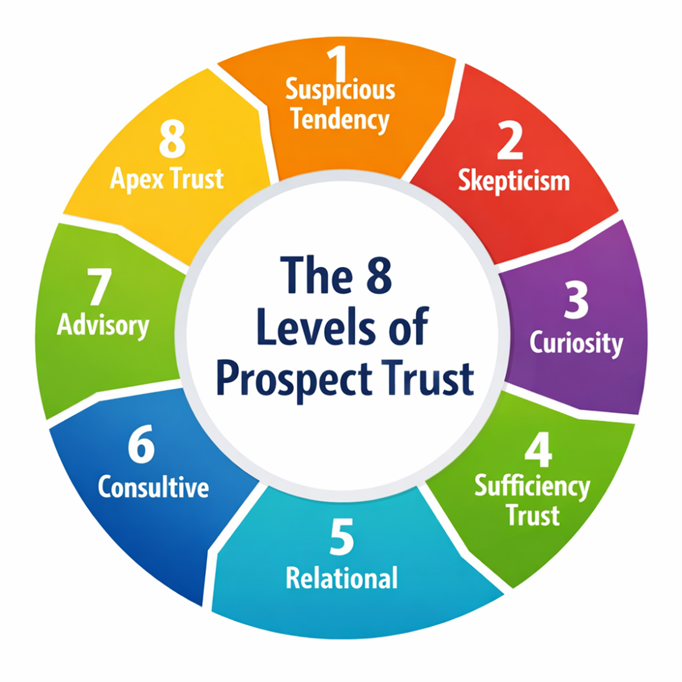
Trust must exist at a sufficient level for the sale to occur. The trust equation is simple:
closing sales = prospect confidence > fear
Confidence must be greater than fear. Learn how to close sales by buidling trust. Prospects fear losing money, making mistakes, damaging professional credibility, hurting their ego, wasting time, buying something that does not work, being embarrassed, feeling betrayed, regret, and more.
Your sales interactions need to lower fears and build confidence by getting to the highest trust level you can.
Trust Level One: The Suspicious Tendency
Trust Level Two: Skepticism
Trust Level Three: Curiosity
Trust Level Four: Sufficiency Trust
Trust Level Five: Relational
Trust Level Six: Consultive
Trust Level Seven: Advisory
Trust Level Eight: Apex Trust

Listen More Than You Speak
Many salespeople interrupt prospects. Strong prospects allow buyers to explain frustrations fully. Longer answers reveal emotional motivations.
A good script should include a section to give you responses to most prospect questions and statements.
A prospect may say:
“We tried another provider last year and wasted thousands.”
That statement reveals fear, disappointment, and caution. A strong salesperson explores that concern carefully before presenting solutions.
Good follow-up questions include:
Become a listener. Listening creates trust and thoughtful questions create emotional safety.

By the way, Trina became a top salesperson.
I urge you to learn how to close sales by replacing persuasion with encouragement or train your salespeople in this practice. When you consider the definition of persuasion and most of the sales persuasion tactics, you realize that these are crutch tactics for salespeople that have not truly learned how to sell in the best interests of prospects.
If you are sales manager or business owner and your salespeople are relying on persuasion rather than encouragement, you are missing out on sales. Also the data shows that businesses using sales persuasion tactics versus encouragement, have more instances of buyer’s remorse and lower overall customer or client satisfaction.